Table Of Content
In this maker challenge, students use the engineering design process to design a covering for a portable wheelchair ramp for their school. The design must be easy to use, and allows people to move up the ramp easily and go down slowly. In this maker challenge, students follow the engineering design process and use water-absorbing crystals to create a bandage that can be used in a traumatic situation, like a car accident or hiking accident. In this activity, students work to solve the problems of a local popsicle shop while learning how scientific and engineering concepts play a part in behind-the-scenes design. Students investigate what causes them to become sick during the school year. They use the engineering design process to test the classroom lab spaces for bacteria.
Production planning
The engineering design process can be extremely useful to any individual trying to solve a problem. Each team member brings different knowledge and experience to the process, which usually improves the results. Students learn how engineers harness the energy of the wind to produce power by following the engineering design process as they prototype two types of wind turbines and test to see which works best. Students also learn how engineers decide where to place wind turbines, and the advantages and disadv...
Bar None: ME Senior Design Challenge
Students design a temporary habitat for a future classroom pet—a hingeback tortoise. The students investigate hingeback tortoise habitat features as well as the design features of such a habitat. Each group communicates and presents this information to the rest of the class after they research, brai... Students learn about providing healthcare in a global setting and the importance of wearing protective equipment when treating patients with infectious diseases like Ebola. They learn about biohazard suits, heat transfer through conduction and convection and the engineering design cycle. Students perform research and design prosthetic prototypes for an animal to use for its survival.
How to teach the engineering design process
After a project is implemented, the Post-Implementation Review is critical for evaluating the success and sustainability of the engineering design. This phase involves analyzing feedback and assessing the entire lifecycle of the product or system. Effective documentation and communication are paramount in the engineering design process.
What does the engineering design process look like?
It’s a series of steps that help them create stuff that works well and won’t break the bank. The EDP is all about brainstorming, getting feedback, and tweaking things until they’re just right. So, it’s a continuous ride on the innovation roller coaster where great ideas meet some serious trial-and-error in the quest for the perfect solution.
Engineering design process
In this course, you will explore the fundamental aspects of engineering design, including requirement gathering, problem-solving and project management. You will actively engage in real-world design scenarios, honing your problem-solving abilities and gaining hands-on experience. By the end of the course, you will be able to confidently gather requirements and solve complex problems, ensuring your designs contribute positively to society.
Will AI Replace the Design Engineer? - Digital Engineering 24/7 News
Will AI Replace the Design Engineer?.
Posted: Wed, 22 Nov 2023 08:00:00 GMT [source]
Access Paper:
Students control small electric motors using Arduino microcontrollers to make little spinning fans made with folded and glued paper sticky notes. They build basic circuits and modify code, before applying the principles to create their own more-complicated motor-controlled projects. Students work as materials and chemical engineers to develop a bouncy ball using a select number of materials. They develop a plan of what materials they might need to design their product, and then create, test, and evaluate their bouncy ball. Students use servos and flex sensors to make simple, one-jointed, finger robots.
Students are asked to design a hockey stick for a school’s new sled hockey team. Using the engineering design process, students act as material engineers to create hockey sticks that have different interior structures using multiple materials that can withstand flexure testing. Students learn about how biomedical engineers create assistive devices for persons with fine motor skill disabilities.
Students practice human-centered design by imagining, designing and prototyping a product to improve classroom accessibility for the visually impaired. Student teams follow the steps of the engineering design process to formulate their ideas, draw them by hand and using free, online Tinkercad softwa... Students apply their knowledge of scale and geometry to design wearables that would help people in their daily lives, perhaps for medical reasons or convenience.
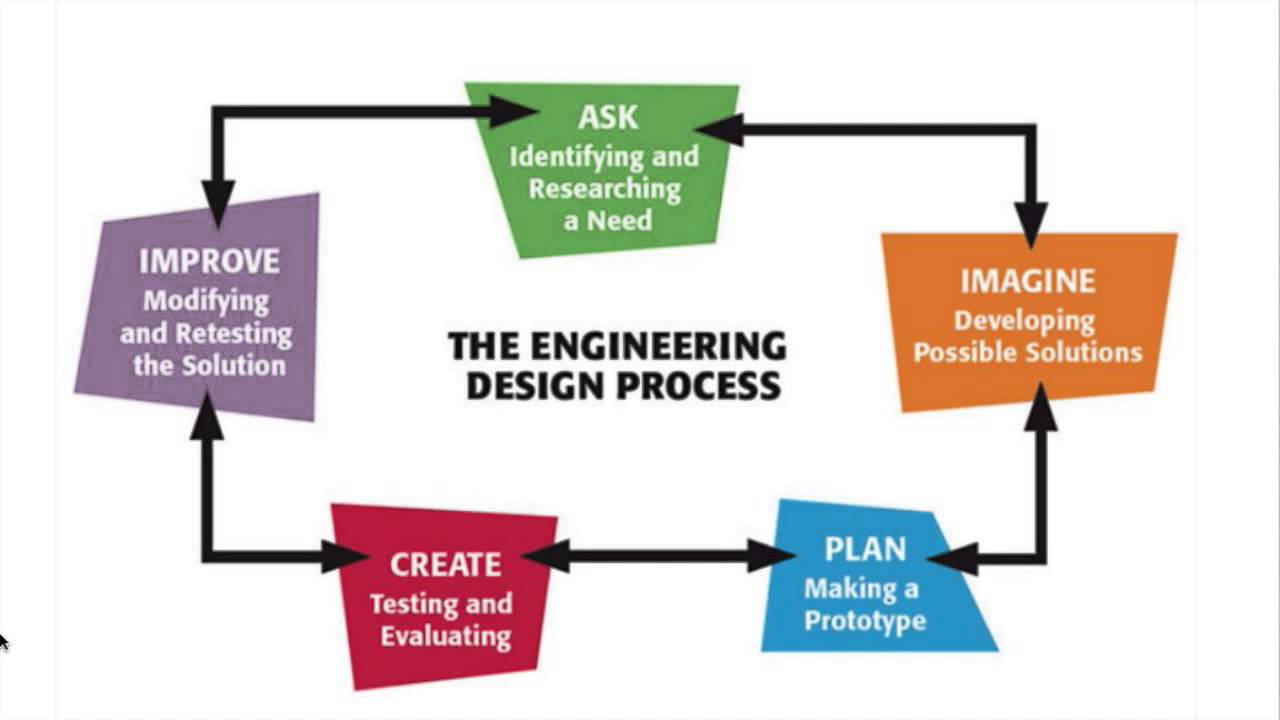
They are introduced to the engineering design process and learn of several famous historical figures who contributed to plow design. Whether on Earth or in space, life-threatening illnesses may occur if the water we drink is of poor quality. It’s up to your students to design and build a filtration system for the International Space Station so they can guarantee astronauts get the safe and clean water they need. The detailed design phase is where a final solution is developed in depth. Engineers define exact specifications, create detailed drawings, and plan the manufacturing process. The Engineering Design Process is a series of steps that engineers follow to come up with solutions to problems.
Students' understanding of how robotic color sensors work is reinforced in a design challenge involving LEGO® MINDSTORMS® robots and light sensors. Working in pairs, students program LEGO robots to follow a flashlight as its light beam moves around. In this activity, students undertake a similar engineering challenge as they design and build a filter to remove pepper from an air stream without blocking more than 50% of the air. Students design, build and test looping model roller coasters using foam pipe insulation tubing. They learn about potential and kinetic energy as they test and evaluate designs, addressing the task as if they are engineers. As part of a design challenge, students learn how to use a rotation sensor (located inside the casing of a LEGO® MINDSTORMS ® EV3 motor) to measure how far a robot moves with each rotation.
Then, in a hypothetical engineering scenario, they use common classroom supplies to design and build their own structural, transport and defense protein models to he... Students further their understanding of the engineering design process while combining mechanical engineering and bioengineering to create an automated medical device. Students design and build small doghouses to shelter a (toy) puppy from the heat—and create them within constraints. They apply what they know about light energy and how it travels through various materials, as well as how a material’s color affects its light absorption and reflection. Design a customized table top supply organizer inspired by the natural home of a ladybug—or any other insect of a student's choosing—to hold all of their classroom supplies!
The engineering design process is designed to be versatile to meet the requirements of different types of projects. The engineering design process was developed to create products that meet the needs of a target audience. By taking a structured approach to design that follows a defined path from problem to solution, engineers can research multiple ideas to determine which solution is most viable. In this fun video lesson, students will pretend to be engineers at an engineering company that constructs paper airplanes. They will identify the criteria for success from provided readings and define the constraints on their solutions. Using the engineering design process they will prototype, test, and deliver their best paper airplanes.
This will vary depending on the project itself, but allows lessons to be learnt from failures and improvements to be made. The interactive diagram below may help you understand the engineering design process, and how it is applied to an experiment or project. Use the "return to top" button to return to the diagram for more exploration.


No comments:
Post a Comment